Research
Mount Logan Ice Core Record
Kira Holland, PhD Candidate
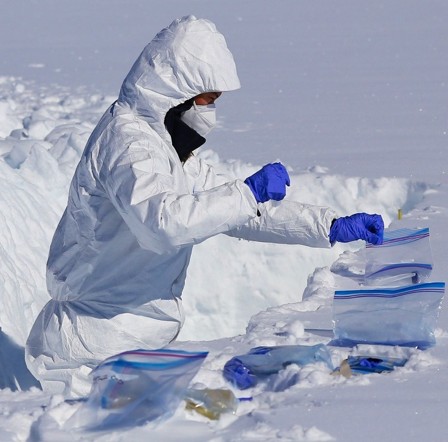
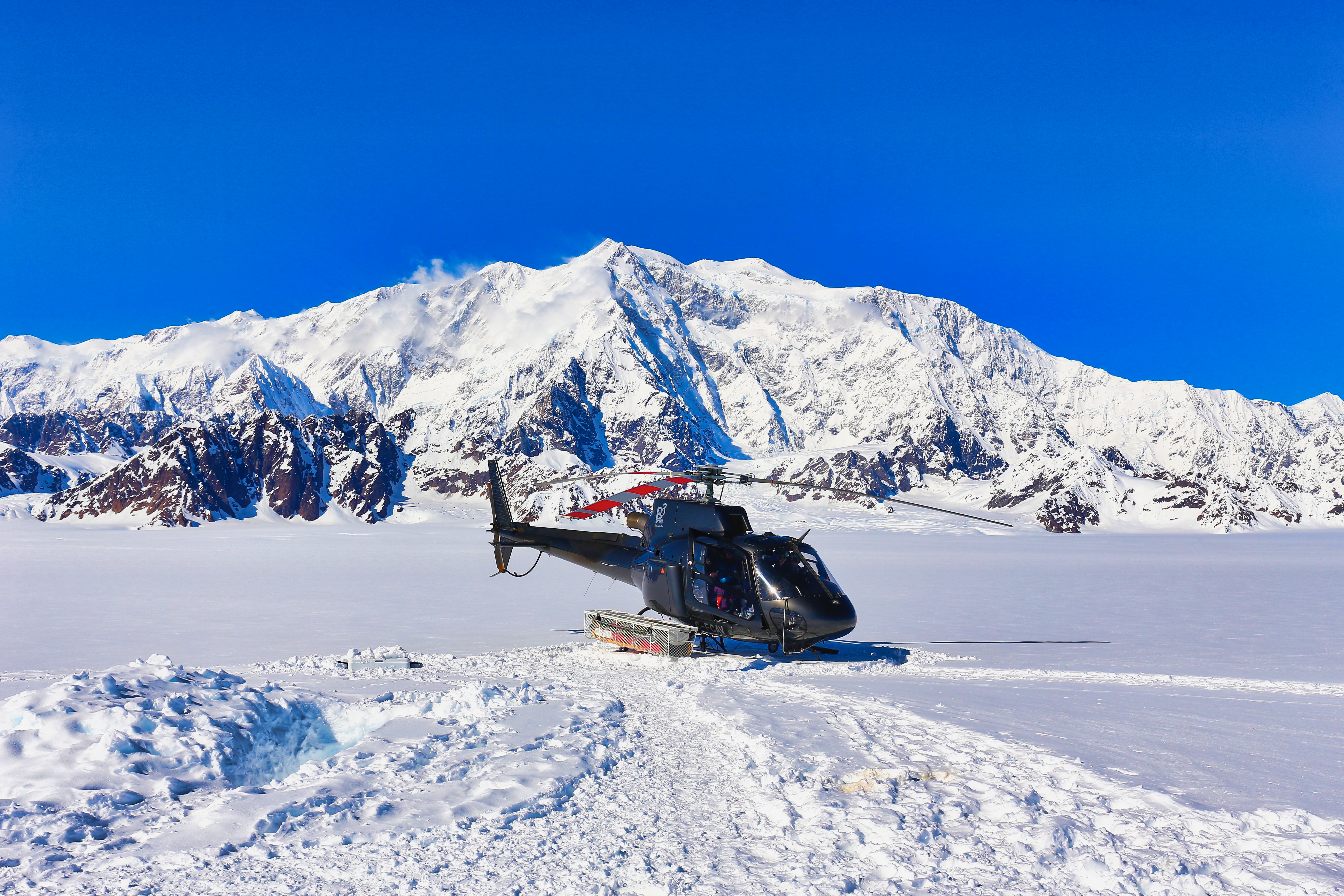
My research focuses on developing and interpreting the 2022 Mount Logan ice core to investigate past climate variability in the North Pacific region. In May 2022, CICL retrieved a record-breaking 325 m-long ice core from the summit plateau of Mount Logan, Canada’s tallest mountain (5,959 m). Ice from this high-elevation glacier preserves a rare, high-resolution record of past climate and environmental change, offering unique insight into how the highest-elevation regions may respond to ongoing global change. My work focuses on developing three key paleoclimate records from this core: (1) accumulation, which tells us how much snow accumulates year-to-year, (2) stable water isotopes, which reveal moisture origins and airmass histories, and (3) bromine, which provides insight into trans-Pacific pollution. Beyond my work, the Mount Logan ice core also captures histories of Siberian wildfires, volcanic eruptions in the Aleutian Arc, marine biological activity, and so much more, providing a rich dataset that will continue to be explored for years to come.
A Mt. Logan Ice Core Record of Volcanism
Hanaa Yousif, PhD Candidate
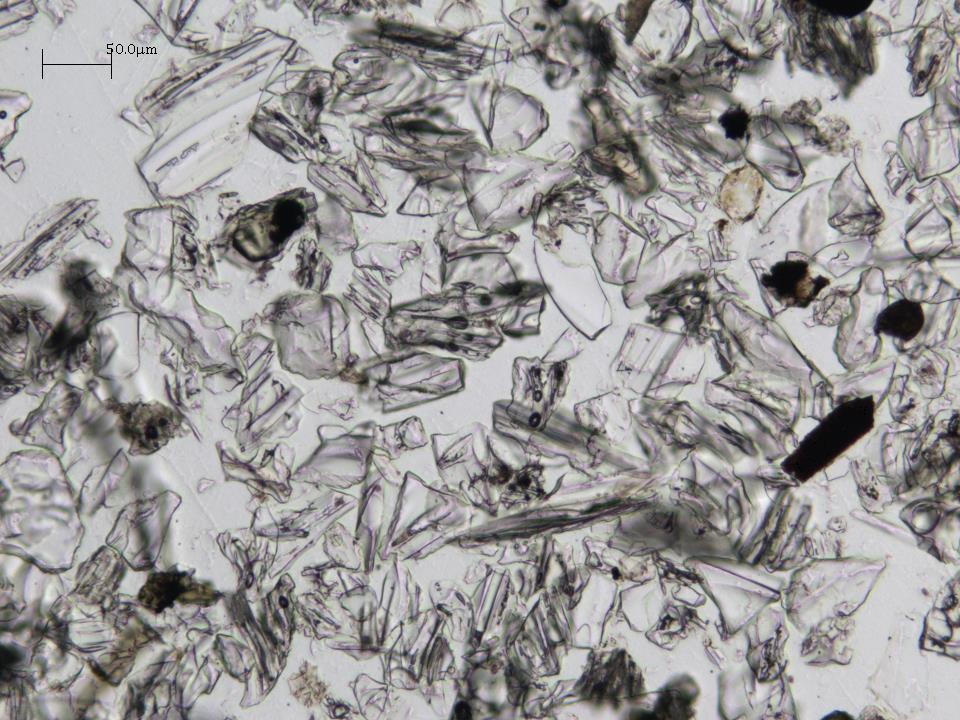
My research focuses on Holocene volcanism and its proxies in Canadian ice cores. The Northern Hemisphere volcanic record currently relies heavily on Greenland ice cores, which are dominated by Icelandic eruptions. As a result, volcanic inputs from Alaska, Kamchatka, and the Kurile Islands remain underrepresented. My project aims to address this gap by improving the detection and attribution of volcanic signals in the Mount Logan ice core, as a representation of the north pacific region. To do so, I target microscopic volcanic glass shards and use an electron microprobe to determine their elemental composition. Because these glass shards preserve a geochemical signature that closely reflects the melt component of magma, they provide a powerful tool for identifying the provenance of volcanic eruptions. When integrated with the aerosol record, this approach allows me to better constrain the volatile load of volcanic eruptions, which provides insights into volcano-climate relationships.
Sea Ice in the Canadian High Arctic
Megan Stewart, MSc Candidate
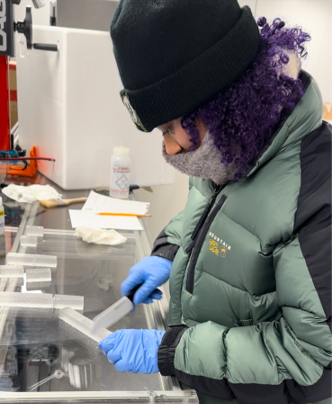
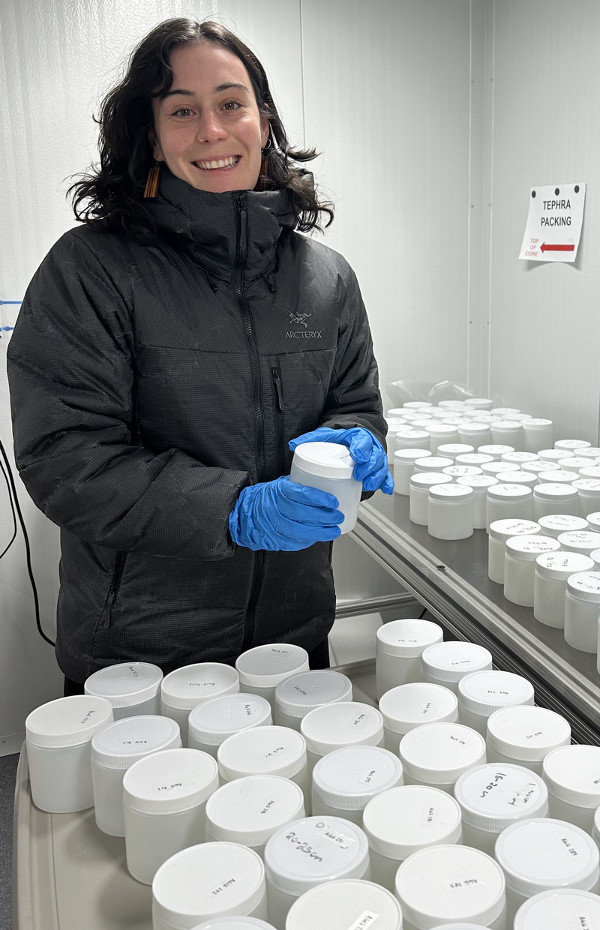
I am studying changes in sea ice in the North Water Polynya and Baffin Bay region, an important and biologically productive region in the Canadian high Arctic that is changing faster than almost anywhere else on Earth, warming at nearly four times the global average. My project focuses on bromide enrichment, a chemical signal preserved in ice cores that allows us to track seasonal sea ice formation. Using high-resolution chemical analysis alongside satellite observations and atmospheric transport modelling, my project will test whether bromide in ice cores can reliably reflect past sea ice conditions in the Canadian high Arctic. Developing bromide as a sea ice proxy would allow us to extend sea ice records far beyond the satellite era and better understand how sea ice has responded to climate change over time. This is important for understanding today’s rapid changes in a longer-term context and may help us unravel the processes driving sea ice variability. Beyond climate science, sea ice changes directly affect Arctic ecosystems and northern communities that rely on stable ice for travel, hunting, and food security. Bromide chemistry is also closely tied to mercury deposition, with important implications for environmental and human health in northern regions.
Continuous Flow Analysis system development
Meg Harlan, CICL Analyst
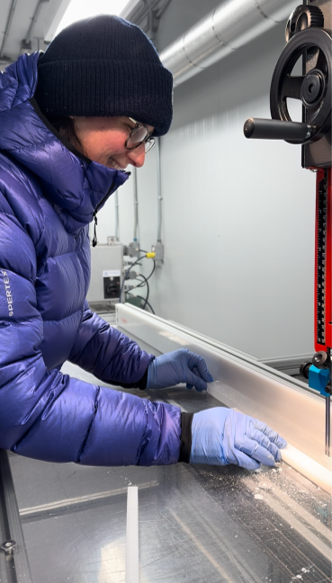
I am designing a Continuous flow analysis (CFA) system here at the Canadian Ice Core Lab, with the aim to increase the analytical capabilities of CICL. CFA is an advanced method for high-resolution analysis of ice cores, designed to minimize the time and labor required for sample decontamination typical of traditional discrete ice core analysis. In CFA, a lengthwise section of an ice core is placed on a specially designed heated plate, where it is melted continuously from one end to another while the resulting meltwater is pumped through a system of analytical instruments and continuously measured. The modular nature of the CFA allows for a customizable design based on individual project goals with interchangeable instrumentation measuring a wide variety of parameters (e.g. chemistry, water isotopes, gases, etc.). Once the CFA system is complete, CICL will be able to produce high-quality, high-resolution ice core records from upcoming ice core projects, as well as the historic archive of ice cores in the CICL collection.
Müller Ice Core
Collaborative project with CICL, University of Manitoba, and University of Copenhagen
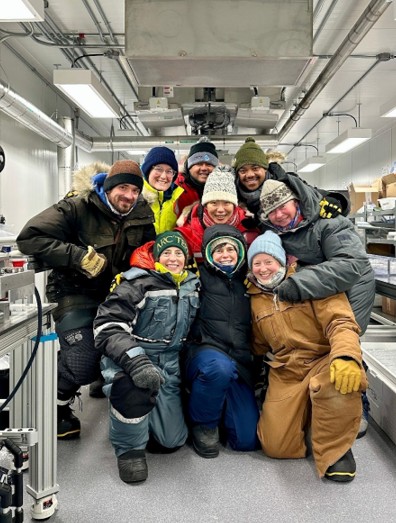
The Müller ice core, drilled in 2025 on Axel Heiberg Island, Nunavut, is the longest ice core ever drilled in the Americas. This ice core has the potential to preserve a climate record from the western side of the Canadian Arctic Archipelago dating as far back as 12,000 years. This new ice core was drilled as part of an international collaboration between researchers in Canada and Denmark. The Müller ice core was processed (cut into sample pieces for future analysis) in the fall of 2025, and is now being analyzed at CICL, the University of Manitoba, and the University of Copenhagen. Stay tuned for exciting findings to come from this important new ice core record!