Meet Xi Ye
Donna McKinnon - 4 September 2026
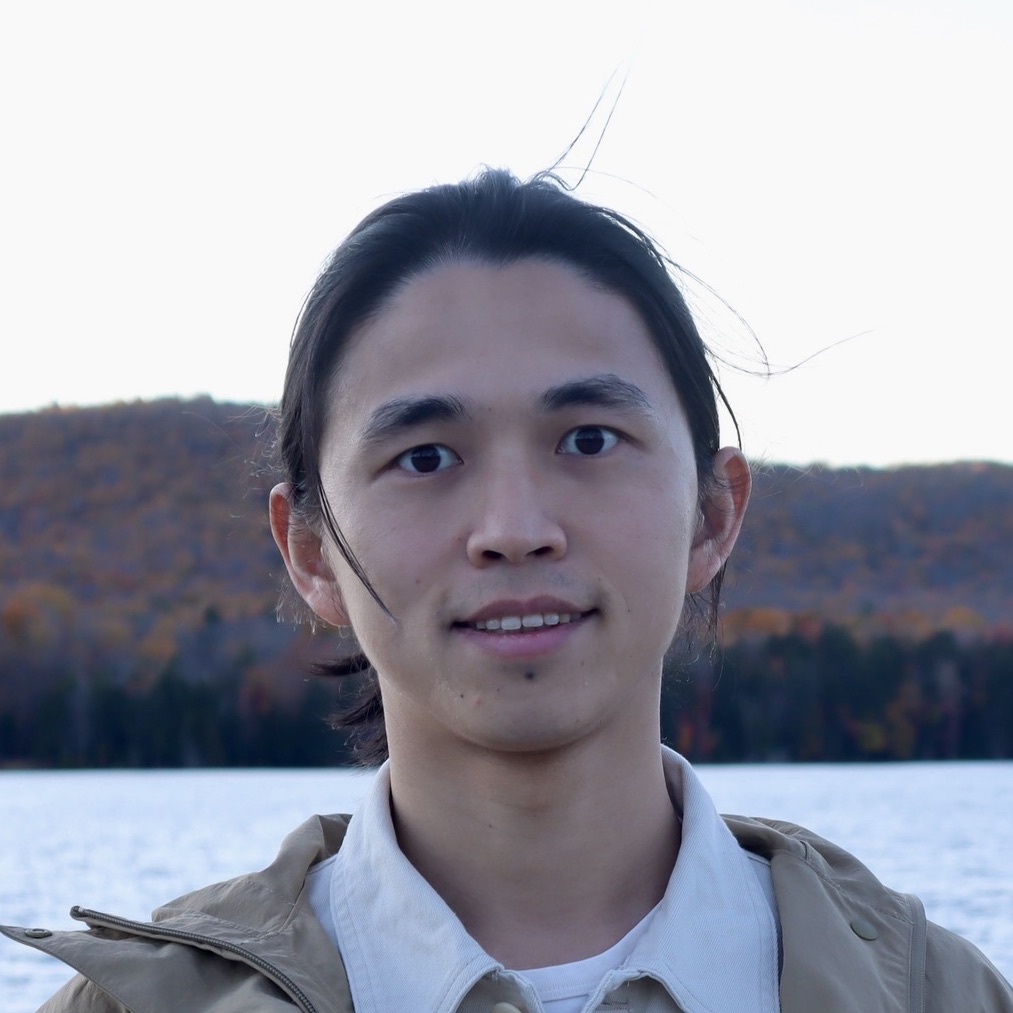
Xi Yi
New assistant professor Dr. Xi Ye has long been fascinated by natural language processing because it uses distinct words and symbols, yet it can express endless complexity. While today's large language models (LLMs) are impressive, he says, their reasoning remains unreliable — a challenge at the very heart of his research.
His drive to make AI models reason more effectively and consistently made the University of Alberta the ideal choice for Xi. With world-class researchers in the Department of Computing Science and the Alberta Machine Intelligence Institute (Amii), the opportunity to collaborate and push the boundaries of the field was a major attraction for him.
Bringing a hands-on approach to the classroom, Xi will be guiding his students to build LLM components from scratch to master the foundational mechanics driving rapid innovation in AI. His goal is to teach them how to experiment with new ideas, rather than just rely on today's popular tools.
Welcome Xi!
What brought you to the University of Alberta?
The U of A has a really strong AI and machine learning community, both in computing science and through the Alberta Machine Intelligence Institute (Amii). That was a big attraction for me. There are many people here working on different parts of AI, and I liked the idea of being in an environment where it is easy to talk to people with different perspectives and start new collaborations. It also felt like a great place to build my own group and work with students on some of the questions I am most excited about.
Tell us a bit about your research and what you'll be studying.
My research is mostly about large language models (LLM) and, in particular, how to make them better at reasoning. Language models today can do many impressive things, but their reasoning can still be quite unreliable. I am interested in understanding why that happens and developing methods that help models reason more effectively and more consistently. A lot of my current work looks at how we train models, how they can use more computation when solving difficult problems, and how we can build language-based agents that can work through larger and more complex tasks. I also care quite a bit about understanding when these systems fail, and making them more reliable.
What inspired you to enter this field?
I first got interested in AI around the time computer vision was really taking off. At the time, things like self-driving cars were becoming very exciting, and I thought it would be really cool to build systems like that. Later, I moved into natural language processing. One thing that attracted me to language is that it is a discrete space — you are working with words and symbols rather than pixels — but at the same time it can express incredibly complex ideas. That combination was very interesting to me.
More recently, language models have made the field even more exciting. They can reason, write programs, use tools and interact with people. There are still many things we do not understand about how these abilities work, which makes it a very fun area to do research in.
Tell us about your teaching. What courses will you be teaching, or what is your philosophy when it comes to teaching?
I will be teaching both the basics and some more recent topics, including CMPUT 267 - Machine Learning I, an introductory machine learning course. I am also developing a new course, CMPUT 656 - Topics in Artificial Intelligence, on building large language models. I like learning by doing things, so that is also how I like to teach. In the LLM course especially, I want students to get their hands dirty rather than only learn about models at a high level. They will actually build and implement different pieces of a language model and see how things work in practice. AI is changing very quickly, so I also hope students come away with the ability to understand and experiment with new ideas, rather than just knowing how to use whatever tools happen to be popular right now.
What are some of your favourite things to do outside of work?
I like climbing, mostly bouldering. I have moved around quite a bit over the past several years, and I have somehow accumulated a collection of climbing gym key tags from different cities. I also really enjoy exploring coffee shops. Whenever I move to a new place, finding good coffee shops is usually one of the first ways I start getting to know the city.
Is there anything else you'd like to share?
I'm very excited to be at the U of A and to start building my group here. I'm looking forward to meeting people across the university, especially people working on problems where AI and language models might be useful.